
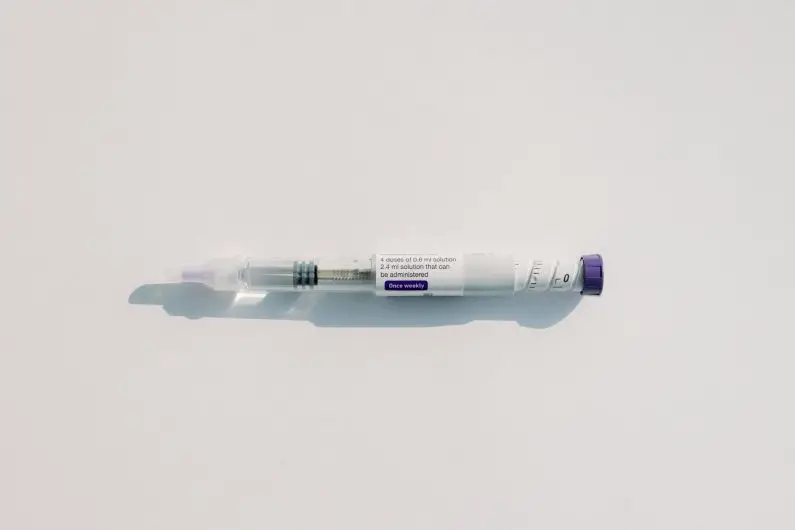
The demand for GLP-1 medications has transformed the pharmaceutical marketplace. Manufacturers, distributors, compounding pharmacies, telehealth organizations, and other healthcare businesses are racing to meet demand for products containing semaglutide, tirzepatide, liraglutide, and other peptides associated with weight management and metabolic health.
But expanding into Puerto Rico is not as simple as identifying a product that can legally be marketed in the mainland United States and assuming the same product can be registered in the Commonwealth.
A recent regulatory issue involving GLP-1 peptide products is highlighting exactly why companies need to understand Puerto Rico’s unique pharmaceutical registration requirements before entering the market.
Puerto Rico Is Taking a Closer Look at GLP-1 Peptide Registrations
Under Puerto Rico’s pharmaceutical laws and regulations, medications generally must be registered with the Puerto Rico Department of Health before they can be marketed, distributed, dispensed, sold, delivered, or otherwise made available in Puerto Rico. The Department’s Division of Medicines and Pharmacies is responsible for pharmaceutical establishment licensing as well as medication registration.
The regulatory framework also specifically addresses FDA-approved medications. Puerto Rico’s requirements call for FDA-approved medications to be registered through the Department’s established electronic registration process, with supporting information documenting FDA approval.
That distinction is particularly important for companies working with GLP-1 peptide products.
For GLP-1 products being submitted for registration in Puerto Rico, the Department of Health is currently taking the position that the peptide must correspond to an FDA-approved product. For weight-management GLP-1 products, that means companies seeking registration are currently encountering acceptance centered on Wegovy, containing semaglutide, Zepbound, containing tirzepatide, and Saxenda, containing liraglutide.
This is a critical distinction because the existence of a peptide in the broader pharmaceutical or compounding marketplace does not, by itself, establish that a particular product is eligible for registration in Puerto Rico.
The Difference Between a Peptide and an FDA-Approved Drug Matters
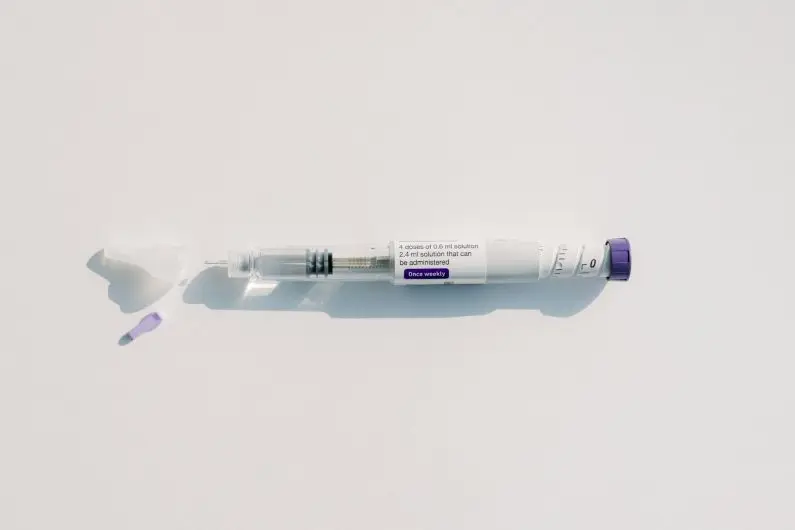
This is where the issue becomes particularly important for compounding pharmacies and companies involved in emerging GLP-1 products.
A company may have a product containing a peptide that is legally compounded, commercially available, or otherwise permissible under its applicable regulatory framework. That does not necessarily mean the product can be registered for commercial activity in Puerto Rico.
Puerto Rico’s medication registration process operates within its own regulatory framework. The Department’s requirements are not simply a mirror of what a company may be permitted to do in another U.S. jurisdiction.
That creates an important compliance lesson: federal eligibility and Puerto Rico market eligibility are not necessarily the same question.
The distinction can become especially consequential when a company assumes that an FDA-registered facility, an FDA-approved active pharmaceutical ingredient, or a product containing the same active ingredient as an FDA-approved medication automatically makes the finished product eligible for Puerto Rico registration.
It does not.
The FDA itself distinguishes between FDA-approved drug products and compounded preparations. In fact, the FDA has continued to take enforcement action involving companies making inappropriate claims about compounded GLP-1 products and their relationship to FDA-approved medications.
For companies entering Puerto Rico, that distinction needs to be incorporated into the registration strategy from the beginning.
The Cost of Getting It Wrong
The practical consequences of submitting an ineligible GLP-1 peptide product can be significant.
When a product is submitted for registration and ultimately rejected because it does not meet Puerto Rico’s applicable requirements, the company has more than a regulatory problem, it has a business problem.
The registration fee has been spent. Internal resources have been devoted to preparing and submitting the application. Regulatory personnel have spent time assembling documentation. Teams may have already begun planning distribution, sales, supply chain, or commercial activity around the anticipated approval.
Then the registration is rejected.
The company is left with an unnecessary expense, lost time, and potentially a delayed market-entry strategy.
There can also be a less obvious consequence: limitations on potential trading partners.
If a product cannot be properly registered in Puerto Rico, the universe of businesses that can legitimately participate in its distribution and commercialization becomes constrained. A pharmacy, distributor, wholesaler, or other potential trading partner may be unwilling or unable to move forward with a product that does not have the appropriate Puerto Rico registration.
In other words, a registration issue can quickly become a commercial relationship issue.
Why Compounding Pharmacies Are Particularly Affected

The GLP-1 market has created enormous opportunities for compounding pharmacies, but it has also created a complex regulatory environment.
Compounding pharmacies frequently operate in a regulatory space where product formulation, sourcing, dispensing, patient-specific prescriptions, facility licensing, federal requirements, and state-specific requirements all intersect.
Puerto Rico adds another layer.
A compounding pharmacy that has successfully developed a GLP-1 business on the mainland may assume that expanding its operations to Puerto Rico simply requires obtaining the appropriate establishment license and registering its products.
That assumption can be costly.
The product itself needs to be evaluated within Puerto Rico’s regulatory framework before the company invests in the registration process. The fact that a pharmacy can compound a particular peptide product under its existing regulatory authority does not necessarily answer whether that product can be registered and commercially distributed in Puerto Rico.
This is one of the reasons Puerto Rico can be particularly challenging for companies operating in rapidly evolving pharmaceutical categories. The regulations may be familiar at a high level, but the application of those regulations to a specific business model, facility, product, and distribution strategy can be anything but straightforward.
Puerto Rico Is Not Simply Another State
For pharmaceutical companies, one of the most persistent misconceptions about Puerto Rico is that market expansion can be handled exactly like expansion into another U.S. state.
Puerto Rico is a U.S. territory with its own laws, agencies, licensing requirements, regulatory processes, and pharmaceutical market considerations. The Puerto Rico Department of Health is responsible for licensing establishments involved in the manufacture, distribution, storage, dispensing, and sale of medications, while also overseeing medication registration.
That means a company can be fully compliant with its federal obligations and still have additional Puerto Rico requirements to address.
It also means that a company can make an expensive mistake by approaching Puerto Rico licensing and product registration as an afterthought. The GLP-1 peptide issue is a perfect example.
A company may spend significant time evaluating a Puerto Rico expansion opportunity, identifying potential trading partners, preparing commercial agreements, and building a distribution strategy, only to discover that the products it intended to market cannot be registered as planned.
That is not a problem that should be discovered after the expansion strategy has already been built.
Regulatory Intelligence Needs to Come Before Market Entry
The lesson for pharmaceutical companies is broader than GLP-1s.
Puerto Rico demonstrates why regulatory intelligence should be part of the market-entry process rather than something that happens after a company has already decided to enter the market.
Before submitting a product registration, companies should understand what the Puerto Rico Department of Health requires for the specific product, how the product is classified, what documentation is necessary, whether the facility and business model require additional licensing, and whether the intended commercial activity is consistent with the company’s Puerto Rico regulatory structure.
For GLP-1 products, this becomes even more important because the regulatory environment continues to evolve. The FDA continues to update its position and guidance surrounding peptide products, while demand for GLP-1 medications continues to drive new business models and new entrants into the pharmaceutical marketplace.
What is permissible or commercially viable today may not remain unchanged tomorrow.
Companies therefore need more than a checklist. They need someone who understands how the individual pieces fit together.
The Puerto Rico Expansion Opportunity Comes With a Regulatory Responsibility

Puerto Rico remains an attractive market for pharmaceutical companies, pharmacies, distributors, manufacturers, and other organizations looking to expand their operations.
But opportunity without regulatory preparation can quickly become exposure.
The current GLP-1 peptide registration issue illustrates how a seemingly straightforward product registration can become a significant obstacle when the company does not understand Puerto Rico’s specific requirements before filing.
For companies working with compounded GLP-1 products, the stakes can be even higher. A rejected registration can mean wasted fees, wasted time, delayed market entry, and fewer opportunities to establish relationships with Puerto Rico trading partners.
The answer is not to avoid Puerto Rico. The answer is to enter Puerto Rico with a regulatory strategy built around the market you are actually entering.
Navigate Puerto Rico With Confidence
The current GLP-1 peptide registration environment is a clear example of why companies need more than general regulatory information when entering Puerto Rico. Understanding the requirements is important but knowing what to do with that information is where the real value lies.
That is where PharmaRegs Puerto Rico provides a different level of support.
Our services go beyond providing regulatory guidance and compliance updates. We can serve as your on-island representative in Puerto Rico, acting on your organization’s behalf to help manage the licensing and product registration process from start to finish.
Our team can handle product registration and establishment licensing on your behalf, helping prepare and manage the appropriate applications and supporting documentation while navigating the requirements of the Puerto Rico Department of Health. We work to understand your specific products, business model, and planned activities so that the appropriate regulatory pathway is identified before you invest time and money into an application.
That hands-on support can be particularly valuable for companies dealing with complex or evolving product categories such as GLP-1s. As the current peptide registration environment demonstrates, submitting the wrong product for registration can lead to rejected applications, unnecessary fees, wasted internal resources, delayed market entry, and limitations on potential trading partners.
Rather than trying to navigate these requirements from outside Puerto Rico, companies can have a knowledgeable regulatory partner working directly on their behalf. PharmaRegs Puerto Rico can help manage the regulatory process while also keeping your organization informed about requirements that could affect your products and operations.
And our involvement does not end with a single registration or licensing application. As your business grows or your products and operations change, we can continue to support your Puerto Rico regulatory needs and help you navigate the Commonwealth’s evolving requirements.
For companies looking to enter or expand in Puerto Rico, that distinction matters. PharmaRegs Puerto Rico is not simply a source of information, we become an extension of your regulatory team on the island.
The goal is to give your organization confidence that its products are being registered correctly, its operations are properly licensed, and its Puerto Rico market strategy is built on a sound regulatory foundation.
Puerto Rico does not have to be a regulatory maze. With the right partner on your side, it can be an opportunity to expand with confidence.